
LUX
SCALE HOW SCHOOL
PIETAS VIRTUS SACRIFICIUM

- What is Lux?
- Enrollment: click here to submit the form.
- CLICK HERE FOR STUDENT SUPPLY LISTS
- ALL STUDENTS
- LOWER SCHOOL
- Little Saints: Grammar School; Preschool to 1st Grade (students of teachers only)
- Pioneers: Art, Cooking, and the Great Books; 2nd and 3rd Grades
- Guardians: Art and the Great Books; 4th-6th Grade Girls
- Sentinels: Art and the Great Books; 4th-6th Grade Boys
- UPPER SCHOOL
- Defenders: Art and the Great Books; 7th-9th Grade Girls
- Cavalry: Art and the Great Books; 7th-9th Grade Boys
- Teaching Apprenticeship Program
What Is Lux?
We need a rally of the really human things; will which is morals, memory which is tradition, culture which is the mental thrift of the fathers.
-G.K. Chesterton
The word lux means “light” in the Latin tongue. Lux is our Art and Great Books tutorial that meets weekly in the Fall and Spring, MONDAY mornings from 9:45 am to 11:30 am, with an optional lunch period from 11:30 am to 12:00 pm. Classes take place in Centerville, Utah, for Preschool through 9th Grade. (Our Little Saints class, which is Preschool through 1st Grade, is for students of teachers only.) The Centerville campus is a single private residence. For the upcoming 2025-2026 school year we meet in the Fall from September 8th, 2025 to November 17th, 2025, and then classes resume in the Spring from February 2nd, 2026 to our last day April 27th, 2026, with no classes on federal holidays and Spring Break. Guardians, Sentinels, Defenders, and Calvary (4th grade and up) are required to participate in letter writing to their peers for their Winter Break assignments. Students mail letters to their peers about the books read over Winter Break.
OPTIONAL LUNCH PERIOD: Students and Teachers will bring their own lunches. During Free Time students are encouraged to be outdoors. With inclement weather, crafts and games will be available to all students indoors. The Savior often involved food when He taught; we believe gathering and breaking bread together to be an important element of a Christian Classical Education. This time will also allow for two celebrations: Halloween (when students are asked to either dress up as a historical figure or a fictional character from classic literature—this year it will be fictional characters from classic literature), and a St. George’s Day party in April.
Lux is a vocation to rally the really human things, to honor the fact that “though created of dust, the human being is the only creature made by God in His very own image and likeness.”1 We see Lux as being sui generis, unique from other art and great books classes offered to homeschoolers in Davis County, because we set out to acknowledge the imago dei found within each of our students. We structure our classes to engage in the dialectic so that every student can be “blessed with a larger truth and a stronger conscience.”2 We recognize conscience to be the Light of Christ, and it is with the greatest effort that we strive to create opportunities that will strengthen the student’s connection to the Light of Christ. This calls for the necessity of dogma, that is, we hold certain truths to be definitive. For example, every student is a child of God, this is absolute, unquestionable truth, therefore every student must be prepared for a life of obedience, sacrifice, and consecration, a life that demands high thinking and low living. An education fit for joint-heirs with Christ cannot be utilitarian or hedonistic, focused only on the outer carefree life of the world. An education for a future king and queen in God’s Kingdom cannot be taken lightly; we must foster an environment that promotes a rich intellectual life, an atmosphere that influences the student to exercise piety and to chase after virtue. This encourages the student to participate in the practice of introspection, and to converse with God through prayer. Our goal is to aid the student in developing the conscience, sustaining discipline, and nourishing wise discernment.
Lux prepares students for battle against the cultural crisis created by secular humanism, even the spiritual plague of darkness that has depleted our society of real meaning and purpose. This post-Christian plague continues to pave a road that “leads to the devil’s version of the Emerald City, where nothing is what is seems, words are no longer tools of truth but instruments of raw power, and the moral compass is abandoned because there are no true poles of good and evil or right and wrong.”3 Lux classes make a special effort to restore Christian culture through tradition, honor, and light, elevating piety, virtue, and sacrifice. Our students break bread together in Christian hospitality, they sing hymns and folk songs, recite poetry, memorize a catechism, create art and verse, write persuasively, give and receive feedback with grace, and participate in the dialectic to make fertile ground for the Light of Christ to plant everlasting roots in their souls. We pray that what happens during Lux will have a memorable and enduring effect upon the student, that he or she may be blessed with priceless interior riches to store upon the shelves of his or her mind. These are the treasures that no man can take from you because they are now a part of who you are. Like Boethius to Cervantes, from the Apostle Paul to Joseph Smith, the student’s mind must be armed with interior riches that bring the greatest of light to the darkest of places, to be a shield against any kind of persecution, for “whatsoever is truth is light, and whatsoever is light is Spirit, even the Spirit of Jesus Christ” (Doctrine and Covenants 84:45).
Boyd K. Packer taught that it is important for a teacher to know that “the Holy Ghost can work through the Light of Christ. A righteous teacher of gospel truths is not planting something foreign or even new into an adult or a child. Rather, the missionary or teacher is making contact with the Spirit of Christ already there. The gospel will have a familiar “ring” to them. Then the teaching will come “to the convincing of [those who will listen] that Jesus is the Christ, the Eternal God, manifesting himself unto all nations” (Book of Mormon, Title Page).
[The Light of Christ] can prompt the farmer in his field and the fisherman on his boat. It can inspire the teacher in the classroom, the missionary in presenting his discussion. It can inspire the student who listens. And of enormous importance, it can inspire husband and wife, and father and mother.
This inner Light can warn and guard and guide. But it can be repulsed by anything that is ugly or unworthy or wicked or immoral or selfish.
-Boyd K. Packer
One more element that makes Lux classes different is the division of the sexes. Beginning in 4th grade, if we are able to gather enough teachers and students, we do our best to make separate classes for boys and girls. At Scale How School we are greatly concerned with the low marriage rate, and consequently the declining birth rate. We see a prodigious effort made by the father of lies to deceive young people from pursuing the greatest characteristic of one’s divine nature: that of becoming a husband and father, or a wife and mother. Many ignore the third to last paragraph in The Family: A Proclamation to the World, that, “by divine design, fathers are to preside over their families in love and righteousness and are responsible to provide the necessities of life and protection for their families. Mothers are primarily responsible for the nurture of their children. In these sacred responsibilities, fathers and mothers are obligated to help one another as equal partners.”4 This section of the Family Proclamation is featured in the Lux catechisms.
By separating the older classes by sex, the tone of each class is shaped and crafted to create an atmosphere for the Holy Ghost to touch upon those tender young feelings of hope, those righteous longings, that advocate for every young girl to become a wife, mother, and nurturer, and for every young boy to become a husband, father, and provider. Scale How School is very interested in passing the homeschooling torch onto the next generation; this will not be possible if the endangered Stay-At-Home-Mom becomes extinct. To help form the appropriate tone, the catechisms are curated for the sexes, with differences that celebrate the divinty of the feminine and the masculine.
Healthy competition in the classroom furthers positive peer pressure—something our homeschool students desperately need—peers who challenge them to improve. However, the reality is that the majority of boys are not interested in competing with girls, not in sports, not in academics, and not in the work place. Playful competition with low stakes can be a fun pastime, such as playing a board game, but if we want our sons to excel more in academics, it is best overall for them to have healthy competition only with their male peers, at least during the teenage years. Teeanage boys and girls together in the classroom often leads to a myriad of distractions—flirtations, sexual angst, lustful thoughts—and we want to minimize those distractions as much as possible.
Lower School
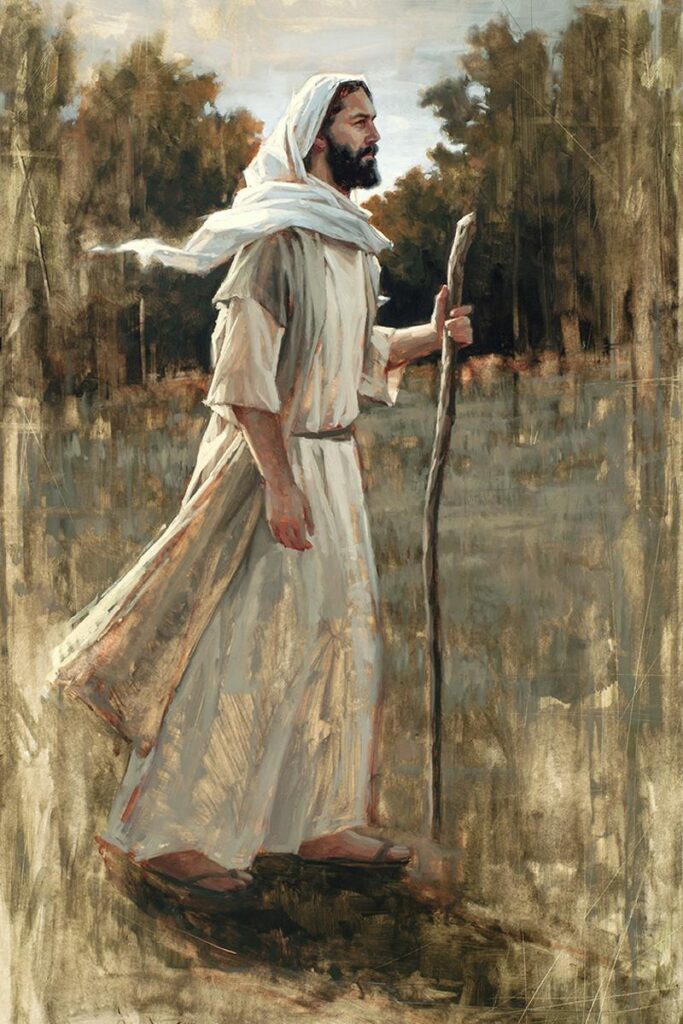
Quench not the Spirit.
1 Thessolonians 5:19
Assembly
For the first 15 minutes of Lux, all the students participate in Assembly, reciting and singing collective Memory Work, including the Lux anthem and motto, hymns, scripture, poetry, sayings, and folk songs. Defenders and Calvary, (7th-9th grades), are required to take turns conducting Assembly.
LITTLE SAINTS: Preschool-1st Grade (children of teachers only)
Main Theme
“Obedience to Gospel principles can make man master of himself, and thus of his own destiny.” -Henry Eyring
Course Description
Little Saints begins the grammar school study of poetry, art, geography, and some math facts, focusing on our place in God’s world, and what God expects from us. Students engage with story, discussion, song and games, as well as art projects to help them understand the gifts God has given them, and how they are to increase their gifts here on Earth. Little Saints provides adequate play time for the students to practice being a good friend to others.
- Memory Work
- Calendar Work
- Songs and Chants
- The Ten Commandments
- Read Alouds
- Arts and Crafts
- Simple Cooking
- Math Games and Songs
- Geography Games and Songs
- Gross Motor Activities, such as playground games
- Recitation
- Free Play
PIONEERS: 2nd-3rd Grades
Main Theme: The Great Books 30 min
What happens in our minds when we read?
It is written: Man shall not live by bread alone, but by every word that proceedeth out of the mouth of God. -Matthew 4:4
“The Book of Mormon was the most correct of any book on earth, and the keystone of our religion, and a man would get nearer to God by abiding by its precepts, than by any other book.” -Joseph Smith
Course Description
This course improves the understanding of literature, exposes students to the work of the Bard, and engages students in moral discussion by way of asking concrete questions about the choices and behavior of characters in books. Students memorize poetry, alongside other memory work, to build up the intellectual and spiritual mind. Students begin to comprehend how good books can help them know God more, and the great importance of becoming a reader in God’s Kingdom. Students are graded and assessed for participation, listening skills, and memory work.
- Memory Work
- Listening Skills
- Oral Narration
- Moral Socratic Discussion
- Recitation
Main Theme: Cooking 30 min
We use our hands to nourish our fellow man.
All wholesome herbs God hath ordained for the constitution, nature, and use of man. -Doctrine and Covenants 89:10
Course Description
This course introduces basic work in the kitchen and fundamental skills in a safe and engaging way. Students learn about food groups, making healthy choices, and simple cooking techniques. Students participate in no-bake cooking exercises, food identification, and tastings. Students learn about kitchen safety and hygiene, such as washing hands and keeping the kitchen clean. Students understand how food plays an important role in the Christian life, by being a part of building community and hospitality. Form I Cooking emphasizes how Christian hospitality is not simply about food, but that it includes practicing lovingkindness and genuine concern for others. Students are graded and assessed for following instructions, participation, and practicing good manners.
- Seasoning Blends
- Ants on a Log
- Basic Rice
- Applesauce
- Gluten-free Pumpkin Muffins
- Mexican Rice
- Homemade Finger Gelatin
- Veggie Soup
- Beans
- Salad Dressing
- Simple Salads
- Grain-free Coconut Flour Blueberry Pancakes
- Whole Wheat Rolls
- Scrambled Eggs
- Boiled and Fried Eggs
- Veggie Stir Fry
- No-bake Granola Bars
- Easy Vanilla Pudding
Main Theme: Art 30 min
What are the fundamentals of art? What makes art good?
And God saw that it was good. -Genesis 1
Course Description
This course is part of the Grammar study of art, focusing on select masters and their works. Students learn art through the imitation of the masters. They consider the context in which the art was created and employ the fundamentals of art in reproducing works like those they study. Students complete the course with a more well-rounded competence in art, a deeper literacy of major works of art throughout history, and a more developed aesthetic. Students procure a better sense of beauty and form, and gain a deeper respect for God’s creation. Students are graded and assessed for growth in skills, following instructions, participation, and completing assignments.
- Learn and Practice Fundamentals of Art
- Papyrus Scroll
- Hieroglyphics
- Masks
- Pyramid and Structure
- Cuneiform
- Relief
- Statue
- Pottery
- Mosaic and Fresco
- Structures and Columns
- Bust and Portrait
- Architecture
GUARDIANS (girls) & SENTINELS (boys): 4th-6th Grades
Main Theme: The Great Books 45 min
Piety and Politics: How does the desire for justice help us love our fellow man?
Greater hath no man than this, that a man lay down his life for his friends. -John 15:13
How does our view of the world influence how we live? Does our view of God influence the way we live?
Does it require more power to forgive sins than to make the sick rise up and walk? -Luke 5:23
Course Description
Students memorize poetry, alongside other memory work, to build up the intellectual and spiritual mind. Students learn the mechanics of poetry by using the classical approach of imitation. They analyze not only poetry, but words and language in general. Students read alongside the teacher during class, and participate in both oral narration, and some written narration. They engage in moral Socratic discussion and practice discernment by evaluating motives, choices, and behaviors of characters in books. Students begin keeping a commonplace book to record evidence of different themes within the text, and to enhance their writing skills. Students receive a grade and assessment for in class work, participation in discussions, and oral presentations. Students meet with the instructor for a one to one tutorial twice per season.
- Build vocabulary
- Read with increasing speed through the development of inspectional reading
- Identify story elements: setting, introduction, protagonist, antagonist, conflict, climax, resolution
- Identify and write in various forms and meters
- Identify characters as good or bad, worthy or not worthy of imitation by God’s standards
- Dramatically reenact important scenes, committing lines to memory and expression
- Formulate a well-reasoned opinion about a literary work
- Become writers themselves by composing poetry in imitation of great poetry
- Appreciate and imitate good commonplacing
- Recitation
Main Theme: Art 45 min
How does good art reflect the lives and times of the people of the period?
“Beauty is not an ornament to the good life, it is at its heart.” -Nick Riggle
Course Description
This course continues the Grammar study of art, focusing on select masters and their works. Students learn art through the imitation of the masters. They consider the context in which the art was created and employ the fundamentals of art in reproducing works like those they study. Students complete the course with a more well-rounded competence, a deeper literacy of major works of art throughout history, and a more developed aesthetic. Students procure a better sense of beauty and form, and gain a deeper respect for God’s creation. Students are graded and assessed for growth in skills, following instructions, participation, and completing assignments.
- Learn and Practice Fundamentals of Art
- Castle and Cathedral
- Architecture
- Stained-glass Windows
- Mosaic
- Fresco
- Icon
- Portrait
- Heraldry
- Tribal Patterns
- Tapestry
- Gothic and Gargoyles
- Illuminated Manuscript
- Symbols
DEFENDERS (girls) & CAVALRY (boys): 4th-6th Grades
Main Theme: Composition and the Great Books 45 min
How did God prepare the world for the first coming of Jesus Christ? How is God preparing the world for the Second Coming of Jesus Christ?
How do we show honor and virtue? What kind of world do we live in?
Leading question: How can we organize and present our ideas to best persuade our audience?
“Only a virtuous people are capable of freedom. As nations become more corrupt and vicious, they have need of more masters.” -Benjamin Franklin
“Now is the time for you and for me to prepare for the Second Coming of our Lord and Savior, Jesus Christ.” -President Russell M. Nelson
Course Description
Composition and the Great Books (Humane Letters) promotes inquiry-based and knowledge-based education through reading difficult and complex books, and discussing the ideas of such books through moral Socratic discourse. Students memorize poetry, alongside other memory work, to build up the intellectual and spiritual mind. Students keep a commonplace book to record evidence of different themes from the texts, and to enhance their writing skills. Students write weekly paragraphs, answering specific writing prompts. They participate in the process of peer-to-peer critique, learning how to gracefully give and receive criticism. They complete six essays using the six parts of arrangement and the five canons of rhetoric, with a greater focus on the first three of the five canons, namely invention, arrangement, and style or eloquence. Students are given a rubric for assignments, highlighting teacher expectations for the assignment. They meet the instructor up to four times during the year for individual feedback during short one to one tutorial sessions. They engage in moral Socratic discussion and practice discernment by evaluating motives, choices, and behaviors of characters in books. Students are graded and assessed on drafts and final drafts, class exercises and participation, and homework.
- Accurately and concisely summarize what is read
- Write a topic sentence
- Write an appropriate thesis statement
- Identify and avoid plagiarism
- Form an ethical opinion about the role of AI in their lives
- Organize a paper by the significance of ideas
- Outline papers before writing them
- Properly cite and document outside sources included as part of one’s paper
- Use classic tools to help overcome three problems faced in the writing process: coming up with ideas, putting ideas in order, and expressing ideas well
- Address the Great Ideas and identify common themes
- Compare and contrast different texts to each other and modern counterparts
- Assess the influence of literature on Western Civilization
- Understand the roles different historical figures have played in preparing the world for Christ, and understand we too have a role to play to prepare for the Second Coming
- Determine some of similarities and differences between our faith and other Christian faiths
- Recitation
Main Theme: Fine Art Practicum: Drawing 45 min
How do the visual arts contribute to our understanding of truth, and the world around us? Why is leisure important?
“Leisure is not idleness, but the opportunity to engage in activities that truly nourish the soul.” -Joseph Pieper
Course Description
Students learn drawing techniques through the imitation of the masters. They practice basic drawing skills, such as accessing the brain’s right hemisphere, focusing on negative spaces and grid drawings, observing ratios and perspectives, shading and portrait drawing. Students participate in discussions about the purpose of the visual arts, what influence AI may have on art, how visual arts may contribute to finding truth, and how leisure is the basis of culture. Students are graded and assessed for growth in skills, following instructions, participation, and completing assignments.
- Understand how leisure affects culture, and explore how a disciple of Christ should be spending his or her leisure hours
- The Perception of Edges
- The Perception of Spaces
- The Perceptions of Relationships
- The Perception of Lights and Shadows
- Ibid. ↩︎
- Hicks, David V., 1999. Norms & Nobility: A Treatise on Education. Lanham, Maryland: University Press of America, Inc. ↩︎
- Guorian, Vigen, 2005. Rallying the Really Human Things. Wilmington, Delware: ISI Books. ↩︎
- The Church of Jesus Christ of Latter-day Saints. (1995, September 23). The Family: A Proclamation to the World. ↩︎